
Exile in Guyville
On the brainworm called misandry, transfeminine contempt for cis women, and the greatest repper essay ever written.

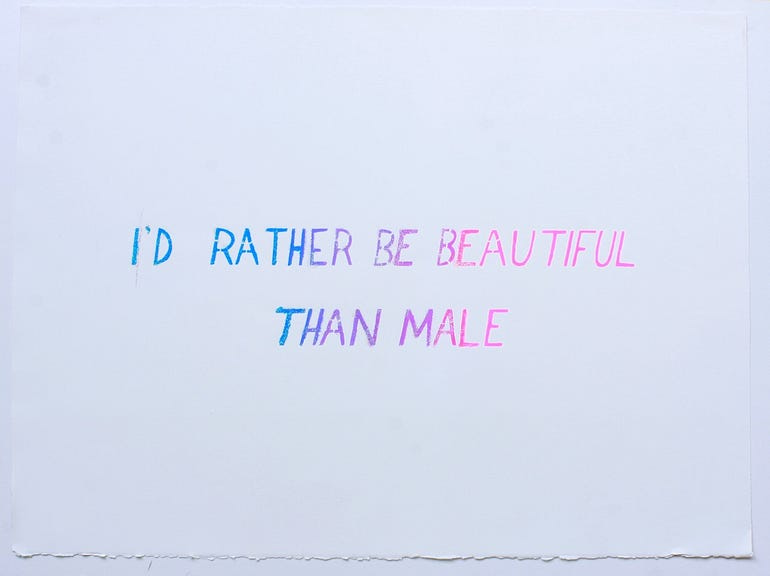
I’m often baffled at how willing trans women are to share their private lives and thoughts online with all these hostile cis people watching. There’s a spectrum to this—I guess I’m somewhere between the respectability dolls and the gleeful freakazoids. I won’t tell you everything or even close to everything, but I don’t think it pays to try to act normal for each other or the cis public when everyone knows we’re generally kind of damaged—how could we not be, after what we’ve been though? The best we can do is make the case that our damagedness isn’t due to our having made a pact with the Devil1 but because transphobia, combined with the psycho/somatic trauma of “gender incongruence”, has bequeathed us disorders of shame so toxic that, if they could be bottled in liquid form, would burn holes in steel. Besides, cis men have been passing off oversharing as art for decades—why shouldn’t everyone else?
Still, there are some transfeminine confessions that it feels genuinely bold to make, and one of the boldest I’ve read is that of Jennifer Coates, the pseudonymous author of a 2016 Medium essay entitled “I Am A Transwoman [sic]. I Am In The Closet. I Am Not Coming Out.” The biggest reason she has decided not to come out: she resents cis women’s casual misandry too much to give them the satisfaction of watching her abandon manhood. On its face, such an argument sounds like fuel for the TERF fire: “Aha, so you do resent women!” To which Ms. Coates replies, “Yes, but not like you think, and you don’t even know the half of it.”
Most people who’ve publicly commented on the essay love it—it certainly has its haters, but over time, as far as I can tell2, its reception has only increased in positivity, suggesting that a lot of trans women are simply too afraid or ashamed to say what Jennifer Coates articulates so devastatingly (not so say poisonously) well. I want to talk about my affection and serious problems with both the essay and the 2010s millennial female culture in which it intervened, and which I believe left a generation of women, cis and trans, a bit worse for the wear.
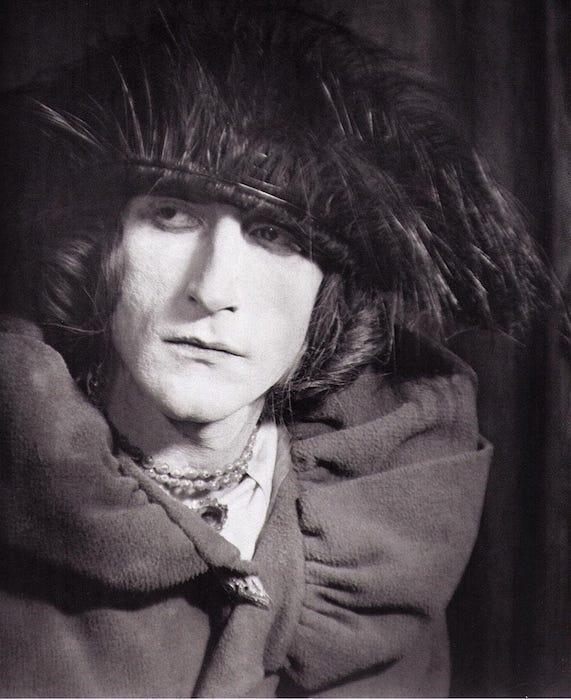
In the first half of the essay, Coates, who was in her mid-20s at the time, describes a lifetime of conscious, consistent and painful gender dysphoria. Her credibility in this department is so impeccable that, if she failed to mention her bisexuality, she’d probably have been waved through as a “true transsexual” by the 20th century medical gatekeepers, something that frankly can’t be said for most trans women. Everything is here: childhood dreams of becoming a girl, being put off by boys and having only female friends, choosing girl characters in video games, being jealous of her sister’s clothing and secretly trying it on, locker room discomfort, pretending to be a girl online, etc. etc. etc. One of many day-ruining passages:
I am twenty-two years old.
A student in my performance art class hangs an empty mirror frame in the center of the room and has everyone pair off into subjects and reflections. A female classmate duplicates my actions perfectly with almost no delay. I look into the mirror and see her face and her freckles — I wave my hand and see painted nails. I get severely dizzy and have to leave the classroom. I cry big, shaking sobs in the men’s bathroom and come back twenty minutes later. The class is over.
THANK YOU JENNIFER. YOU HAVE GOUGED OUT MY HEART WITH A RUSTY SPOON. LIFE IS LONG AND CRUEL AND I WOULDN’T TRADE IT FOR ANYTHING.
She also documents compulsory repression of all this:
I am learning the rules, and I am learning that boys liking girl things is a very high stakes issue. I am learning that adults react the same way to my interest in makeup as they do to my interest in matches and lighters.
While she’s definitely overwrought, Coates is forceful and compelling, balancing anger and tenderness in a way that still haunts me four years after I first read this essay. Particularly touching (and important, as we’ll see later) are her descriptions of positive relationships with peers at the all-boys prep school she was banished to:
I meet boys who like to read what I like to read. I meet boys who also have terrible secrets. I meet boys who agree with me that it is terrible to be a boy, although they don’t seem to mean it in the same way that I do. We are not proud to be boys, but we have fun with each other. We throw rocks into ponds and have sixteen-year-old arguments about time travel. We steal condoms from the convenience store. We are beaten up sometimes. […] We lie about our sexual experiences, but we listen raptly to each other’s lies as if they might contain traces of truth, like veins of sexy quartz. Some of the boys are straight and some of them are gay — I kiss a few of each. I realize that I do not love boys in the same way that I love girls, but I do love them still.
Victimization and alienation are certainly present in Coates’ narrative, but this sweet, nostalgic passage adds an inconvenient nuance to an otherwise pristinely orthodox picture, and it’s the first signal that she’s going to depart from the usual masculinity-rejecting transfeminine narrative in a rather drastic way.
In college (which, if I’m doing the math right and she didn’t take a gap year, would have been from 2008-2012), Coates makes a bunch of cis “feminist” friends. Despite their liturgical declarations that “anyone who wants to be a woman can,” these overenthusiastic young radicals paradoxically embrace a hard essentialism of gendered socialization. Coates is told there are lines she cannot cross, both because it is rude and because she simply doesn’t have the lived experience: “I am not really allowed to talk about femininity because I am a straight cis boy. […] I am told that I could not understand or experience [female friendship].” Despite understanding that “trans” is the thing she is by now, she never comes out to any of them, preferring to let them dig their own graves with their hot takes.
When I found myself in a woman-dominated friend group for the first time in the late 2010s, I experienced the same thing. Often I was the only (apparently) cishet guy, so I had to put up with a lot of man-bashing in the name of, if not exactly feminism proper, then a sort of pre-feminist resentment of men, otherwise known as misandry.
This distinction between resentment and actual politics seems obvious, but in the orgy of “woke” posturing that was many parts of the 2010s, it was often ignored. By then, the conscience-stoking second wave insistence that the personal is political had begun to degrade into the contention that everything is personal, from which premise comes the so-called Oppression Olympics, standpoint epistemology bastardized into “stay in your lane” attacks, and everything else that poisoned actual organizing at a time of massive awakening in socio-political consciousness that now feels mostly squandered.
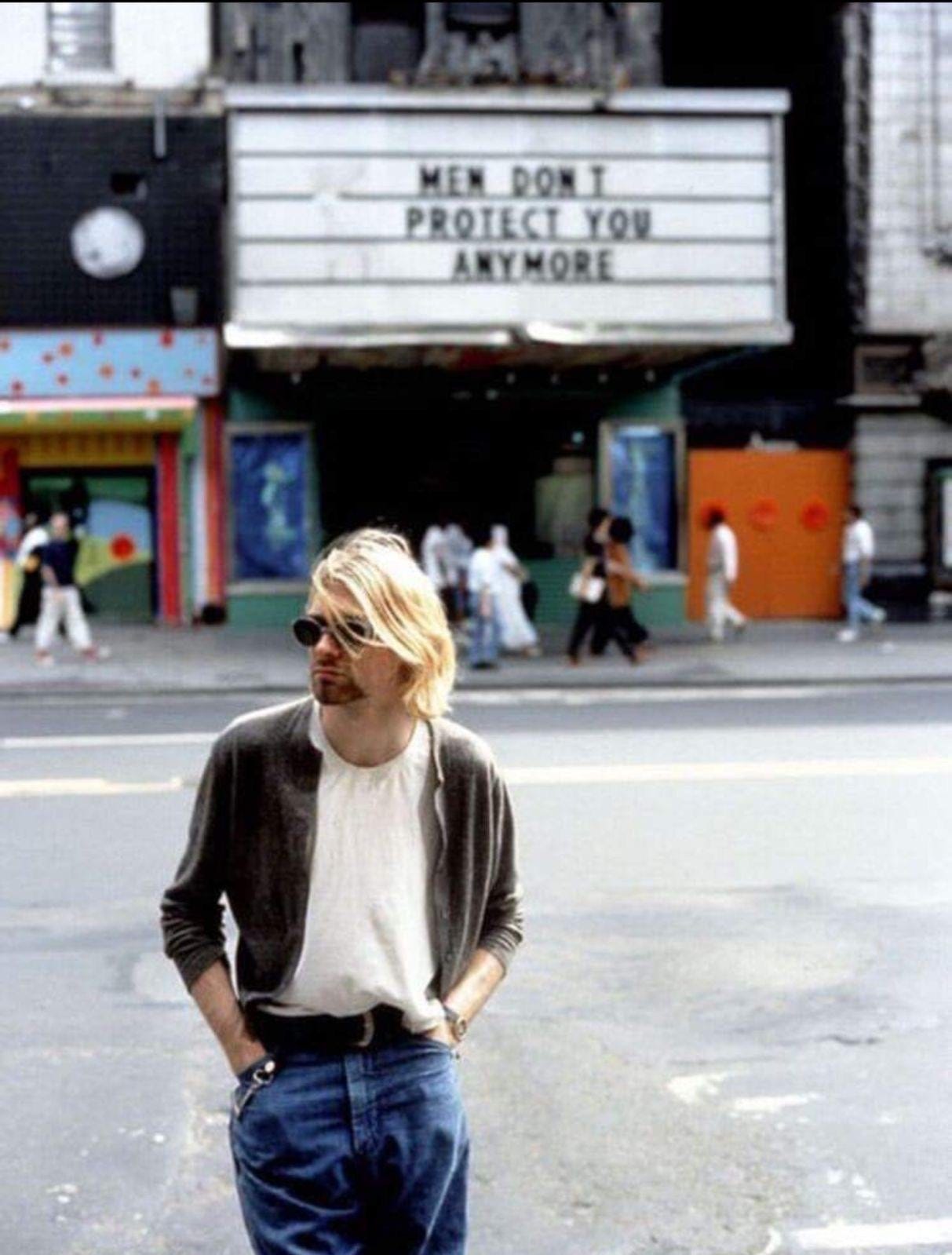
Men have always been intimidated by misandry. If they don’t find a way to overcome their intimidation by fetishizing it (many such cases), they quickly get defensive, perhaps hostile. Bikini Kill sardonically reads a negative male review of their own performance in an early song:
“I was shocked at how contradictory their words and actions were. The supposed message of Bikini Kill’s music and literature is girl love and feminism, yet what comes across on stage is man hate—a fanatic rebellion against the world and themselves, played loosely, loudly, and out of sync.”
Cunty! But such talk mostly reeks of a sense of feeling left out, and god forbid women have anything of their own that men can’t understand3. It is pathetic to talk like this as a cishet man, but it’s stranger when a cishet man actually tries to “get it” and earnestly be a feminist. He is assumed, and with considerable anecdotal justification, to mostly just be trying to fuck, or at least to be on some weird self-gratification trip. This is the stereotype spun out in Tony Tulathimutte’s notorious short story “The Feminist”, an agonizing and alienating depiction of a self-loathing young cis man sincerely trying to do right by women (and get rewarded for it with admiration, friendship, and just a little pussy), only to find himself accurately read to filth:
“I mean, what the fuck do you want? Somehow you got a shit deal. Nobody knows why. Maybe it’s like you never really grappled with this shit because you thought you were exempt. But you refuse to change and are shocked when nothing changes. It’s not like you enjoy it, but you do enjoy pushing other people’s faces in it, that’s your main consolation. Weird how you’re always right about rejection, since nobody’s ever had it worse, nobody’s as pure and as wronged as you. Yo everyone! Check out the Woman Respecter! Last principled man right here! And that’s why you need it, because you get to convince yourself you’re being rejected for your virtue, not cause you’re a bummer. You’ve turned your loneliness into this, like, fetish necklace of martyrdom. And all of us,” they gesture around to other picnickers, “have to sit here and rubber-stamp your feminism. If we don’t indulge your wallowing, we’re being callous and, like, complicit with some diabolical global conspiracy that’s keeping you from getting laid. But if we do, then we’re ‘disingenuous’ because none of us will fuck you ourselves. Right? Am I right, everyone? Hands up, who agrees?”
Tulathimutte ensures that everything preceding this epic read confirms its correctness—but what if someone who seemed like this kind of guy was actually a trans woman, relating to other women and their political struggles not as a means of “earning” their love, but simply because he feels like one of them? What if, in attempting to meet the demands of his male socialization without completely abandoning his female inclinations, he ended up a bit of both? Unless he tells you about his transness, from the outside, how could you even know? He would, perhaps, not be roiling with the same unbearable passive-aggression, but wouldn’t it still be weird? Wouldn’t you assume he’s just another incel freak, and wouldn’t that assumption color his every action against him?
Women in the online and IRL communities in which I participated in the 2010s were quite clear that men were to be regarded as guilty of misogyny until proven at least relatively innocent. Men simply did not see women as people: some guys might be a fun hang, but the sexism was going to manifest eventually. The dumbest thing you could do as a man entering into a female friend group, then, would be to expect a presumption of good intentions instead of being aware that there’s a justifiable baseline of distrust between you and the ladies.
Jennifer Coates, however, refuses to accept that she, being politically male, is automatically an agent and beneficiary of patriarchy, and thus presumptively guilty by association. Her soul is beautiful; she is not like other guys. This is immature and egotistical, but what’s interesting is how the budding collegiate feminists she’s surrounded herself with completely fail to convince her of anything to the contrary. Instead, collapsing the distinction between private experience and systemic complicity, they insist that men are the ones who aren’t people: they do not possess finer emotions and sensitivities and tenderness; they cannot victimize one another in ways quite similar to the ways they victimize women. Masculinity is" “unequivocally toxic,” they say. Any admirable, empathic qualities in men, she is told in class, “are actually femininity,” not native to men but appropriated from women.
My own feminist friends were never so extreme, but they openly took it for granted that as a man I was simply a bit cursed, and it was hard to swallow, even though ironically, in some ways, it allowed me to get away with things, because it was assumed that as a mouth-breathing male, I had less agency and awareness of the world. I occasionally spoke and behaved in “cancellable” ways, but these women remained loyal to me—they didn’t take my side, mind you—even I didn’t do that, which helped—but they didn’t shun me either. What this taught me was that a lot of their harsh rhetoric was simply rhetoric, a cheaply satisfying and empowering way of talking about men, but they were far more sympathetic toward the favored men in their lives than they were toward the cartoon misogynist villain they associated in speech with the word “man.”
This was typical, I think: the bark was always worse than the bite, even at the height of #metoo fever. Throughout the “woke era,” which we might date roughly from 2012 through 2022, most very shitty men did not lose their jobs, were not shunned from their social circles, were never called out in public for what they did—and yet, there was a fear of this happening all the time. Men, however fatuously, claimed to be terrified to date women or tell jokes at work. This is the awesome power of women to curate vibes. The shit talk about men got crazy, as Coates accurately reports from the eye of that cultural storm:
Down cascade the gleeful tweets from ciswomen [sic] about how women are more beautiful than men — how graceful the female body is, how utilitarian the male. How awesome boobs are. How bad boys’ taste in clothing is. How incompetent they are emotionally. How they’re too weak to handle childbirth and periods. Neckbeards are the scourge of the internet. They wax disgusted about “dad bods.” SCUM rhetoric is revived with inconsistent levels of irony. The meme gospel says penises are just shitty clitorises. […]
I mention to a cis feminist friend that I don’t think it’s cool to use “neckbeard” as a pejorative. I say I think it’s hypocritical. I say I know some wonderful, tender, thoughtful neckbearded humans. I also know some people who are very self-conscious about their neck hairs and can’t do much about them. I wonder if there are ways to criticize people based on their character without impugning the hairs that come out of them. She says I am mansplaining. She says I am Not-All-Men-ing. She also says I couldn’t possibly understand the standards of beauty imposed upon women. As if I didn’t spend years bent over a toilet, feeling miserably that even if I were thin enough I wouldn’t be girl enough.
Of course, men had been talking like this about women for-fucking-ever. Didn’t women deserve a little vengeance, as a treat? Surely they did, but the wanton indulgence of some of them in it undermined their claims to be morally superior. Mind you, I don’t think women are morally superior to men, whatever that even means, but that’s the whole point—this was just shit talk, to an extent good clean fun, and men should have had more humility and a better sense of humor about it, but a lot of millennial women convinced themselves it was feminism, and reactionaries were happy to agree. You can’t do anything about reactionaries, who will always see you in the worst light, no matter how principled you are. The real mistake of casual misandry was the way women fucked themselves up with it, the way it led to new mental derangements like heteropessimism, first coined by Asa Seresin in 2019 as the orgy of misandry was cresting over its peak. Seresin:
Social movements such as #MeToo or the South African protest against intimate-partner violence #MenAreTrash demonstrate the frightening urgency with which heterosexual culture needs to be revolutionized. Heteropessimism might seem like a starting point of that revolution, but in reality its anesthetizing force has had the ironic effect of stalling some of the momentum of these movements. If “heterosexuality” becomes shorthand for misogyny, the proper object of critique falls from view. To be permanently, preemptively disappointed in heterosexuality is to refuse the possibility of changing straight culture for the better.
I understand not wanting to help or indulge men, but babe, you gotta take care of yourself, and like it or not, the men who cross your path have to be dealt with not as they should be, but as they are now. In our trauma-driven mania to hold men accountable, a lot of us have ended up holding ourselves hostage.
The woke era was also the “trans tipping point,” a moment when increased access to information about transness online, a calculated shift in queer activism toward trans issues, and the mainstreaming of informed consent as the standard for gender affirming medical care led to a massive uptick in transitions. I couldn’t find a good graph from the United States, but check out this data from the UK:
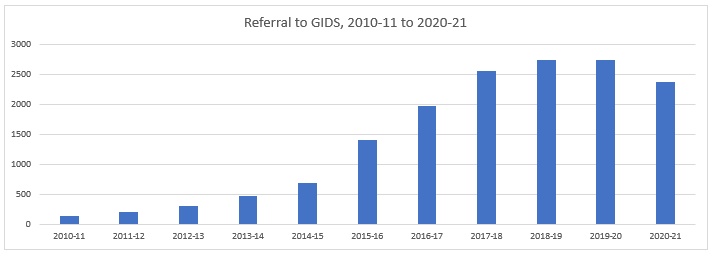
For these and a number of less fortunate reasons4, 2010s and 2020s transitioners constitute the great majority of trans people alive today, which means that transfeminine culture has been heavily shaped by a once-fashionable edgelady misandry that is rapidly becoming culturally and politically obsolete, and many of us continue to keep the faith even as younger cis women have begun to move on (in some cases, toward more resilient forms of feminism, in others, not so much).
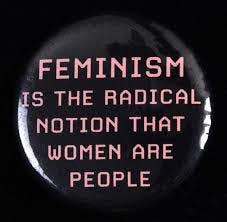
One of the consequences of clinging to this attitude is a complete allergy to any former affiliation with boyhood and manhood, coupled with an idealization of womanhood that feels a lot like “putting women on a pedestal” misogyny, but done lesbianly. This may seem harmless, but I think it causes a myriad of problems—for instance, anyone who has feelings about their male past more complex than total revulsion is made to feel like an imposter; on the other side of the coin (and this is admittedly an extreme example but it does happen) portraying womanhood as magical and inherently good allows abusers in our communities to excuse predatory behavior on the grounds of their simply not being a man. It also holds out an unrealistic promise to aspiring transitioners that all of their personal guilt and shame will be absolved after they finally become women. We need to find a way out of this and start admitting that women are just people, actually. Isn’t that, at bottom, what feminism was always supposed to fighting for?
The good news is that signs of new avenues are everywhere, from the cheeky but strangely affirming self-identification of younger online trans women as “boys” to the openly messy, unorthodox, and abject visions of what is increasingly being described as a renaissance for transfeminine art. More of us are starting to embrace the idea that taking ourselves seriously is compatible with having a sense of humor about ourselves—each, really, is vital to the other. Our suffering doesn’t always make us beautiful—sometimes it makes us ugly. At bottom, it’s nothing but suffering, and suffering is about what you do with it. Nobody worships Jesus because he got killed by the state. They worship him because he allegedly got resurrected. Well, so did I.
Jennifer Coates, for all her strengths as a writer, ends up seeming pretty fucking annoying by the end of this essay as she lists her reasons for not transitioning5. Many of her initial excuses just amount to uncontrolled anxiety, and I can’t take them very seriously, to be honest. They are whiny and despairing and just untrue—typical 4chan repper shit. But then she gets a bit more interesting:
I hate that the only effective response I can give to “boys are shit” is “well I’m not a boy.” I feel like I am selling out […] the boys who I have met and loved from inside my boy suit—who believed they were talking to a boy. I feel like I am burning the history of the naked body that sits on the floor of my shower. The body that went to prom in a boxy tuxedo and coveted the dresses.
We talk a lot, to the point of cliche, about the guilt that survivors of trauma can experience. You’ve heard it a million times: in the absence of a better explanation for overwhelming pain, or perhaps in the face of an explanation that’s too scandalous to bear, survivors often end up blaming themselves. Better to blame someone than no one, or worse, to entertain the notion that life is cruelly arbitrary.
But there is another common response to trauma: pride at having survived. Rather than blaming ourselves, we gas ourselves up: what didn’t kill us made us stronger. We begin to see ourselves as superior in some way to anyone who hasn’t suffered like we have, at least in this particular department. Prideful survivors who’ve suffered at the hands of another may be perfectly willing to blame that other person, but they will insist that the perpetrator didn’t break them, or that they got over it—and yet, for some reason, they still can’t stop talking about it.
Jennifer Coates strikes me as a prideful survivor of the trauma of transfeminine boyhood. Beneath the sentimentality of her anecdotes about soft masculinity lies a much tougher layer of skin, calloused from years suffering at the bottom of a pitiless, brutish hierarchy. She doesn’t know how to honor The Boy Who Lived (no pun intended) while becoming The Girl Who’s Going to Be Okay. This is understandable, but what I cannot abide is her arrogant despair in believing this task is impossible. This is serious shit—you see someone acting like this and you have an obligation, if it’s possible and appropriate for you, to tell them to fucking knock it off.
And yet, even here, she’s still right: not about herself, but about the fact that cis women truly don’t get what we’ve been through—when it comes to trans women, it’s not just cis men who need to shut up and listen. Too many future men and future trans women are virtually denied an education in empathy, finer social skills, and emotional self-regulation; too many grow up lonely, angry, volatile wrecks, dangerous to themselves and other people. Too many, under enormous pressure to be winners and killers, internalize a toxically brittle, grandiose ego to stave off a sense of failure that’s actually just what it feels like to be a normal, vulnerable person. To be raised this way is to carry a lead weight inside you heart that says “You must be strong, regret nothing, and never feel.”
Cis women know this, but they often only see the obnoxious, cruel, and selfish results of it. Trans women have seen this hell from inside. We are, by nature, detached from it, but that detachment doesn’t exactly protect us from toxic masculinity or its temptations. Our desires are different, our allegiances split by the demands of survival, but we have felt the abandonment, the cold slap on the back, the inarticulability of feeling. We have been in the locker rooms, and the shit said was vile. We have also felt the pressure to join in, and many of us did, and felt vile for it. Many cis men have, too. Coates:
I was born into that shitty town, maleness, in the remains of outdated ideals and misplaced machismo and repression and there are some good people stuck living there. They are not in charge. They did not build it. […]
I could write a hundred pieces about the ways men and masculinity have damaged me and the women I love, but you could throw a single stone into the internet and hit three of those. This piece is about what I don’t get to say.
What sorts of obligations of affinity does a transfeminine person, prior to transition, have to womanhood? She has never really been a boy or man in her heart, but she is not yet materially a woman. Are women necessarily her people? Coates’ testament, whatever problems we ought to have with it, tells us that the answer isn’t simple.
I love guys, and I love hanging out with them. I vastly prefer estrogen, but I miss some things about testosterone. I think it’s awesome that trans men exist, even though their desires are completely the opposite of mine. It’s fun sometimes in that shitty town. Patriarchy is evil and post-patriarchal masculinity would, I think, look quite different. We must imagine a post-patriarchal masculinity. Men want to be men, and I think a lot of them also want to be good men, but they’re woefully ill-equipped by their upbringings to do so. Dudes rock, and they need to rock, and I believe they can learn to rock in a way that doesn’t harm women—they already do it all the time, but you rarely, especially on the cultural left, hear about cishet men being good to women or sweet to each other, for the same reason you don’t hear about a plane that didn’t crash.
My feminist friends helped me believe I could have platonic female friends without it being weird—putting up with their barbs was a small price to pay for a companionship I greatly preferred, on balance, to that of men—but their fashionable misandry reinforced a TERFy notion I already held that the bridge between the sexes was insurmountable. It would ultimately be the work of Natalie Wynn, who, apart from being pro-trans, is a rather conservative thinker on gender and sex, that allowed me to finally recognize myself as trans and begin to act on it. Watching Wynn wrestle in real time with both her attachment to manhood and desire for womanhood across several years of videos, I came to understand that a person’s selfhood, even on a level as deep as sex and gender, is defined more by where they decide to go than where they came from.
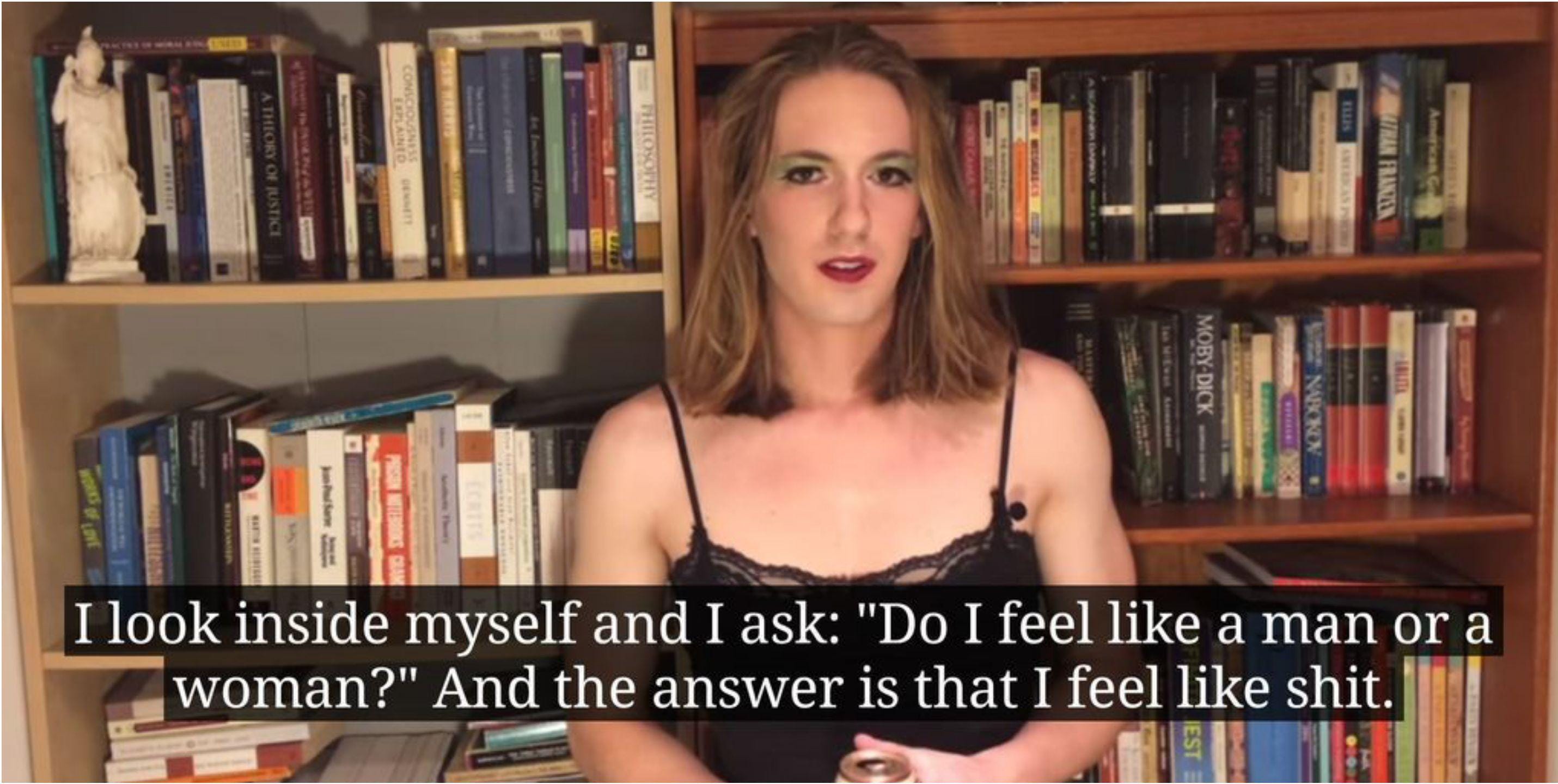
Coates’ essay is tragic, but not completely for the reasons its author believes. Reading it over again, I see her as a victim of a culture that loudly validated the existence of trans women while denying them the therapeutic tools and the moral permission to work through and honor the joys, pains, and confusing contradictions of transfeminine boyhood. In this context, if only in this context, I think of her as an ethical hero. She could not transition in a way that satisfied her conscience, and so she did not, and in that, we failed her. She lived her truth, but her truth sucked.
Denial that male socialization includes negative experiences of masculinity perpetuates the envious paranoia of a pseudo-feminist misandry that imagines that for cishet men, everything’s just fine, a big orgy of entitlement and dick-measuring. As trans women, we know in our hearts that that shit isn’t true, and it’s a Faustian bargain to try to affirm it as a means of validating our transness, because it only ends up affirming our alienation from femininity by justifying the sort of cis attitudes that drove Coates so crazy.
Likewise, it is ridiculous and self-sabotaging as a trans woman to harbor a blanket resentment for cis women. Yes, many of them will never really consider you a woman, even if you pass—if you don’t believe me, read Thalia Vacha’s disturbing story of how disclosing her transness completely changed the attitudes of the cis women in her office—but many others will be far nicer to you than you could ever imagine. We have so much to teach each other about womanhood, and many cis women are willing to listen, even actively interested. You belong in their spaces, if you want to be there, and you deserve their companionship. Because some will try to exile you, it’s crucial that you don’t exile yourself. You’re here because you know you’re supposed to be. Life is too short to waste in doubt and too long to endure in doubt. You’re not a vampire, you don’t need to stand by the door waiting for permission. Come inside.
I have full confidence that Satan, if he exists, is on the side of the TERFs, the fascists, and whatever the fuck people like Brianna Wu are.
Back in 2022, when I first read the essay, I used to see people griping about it on Twitter, but a recent search of both Twitter and Bluesky turned up nothing but commiseration. Perhaps people’s attitudes are changing, or I just extrapolated too much from a few posts.
God actually pretty much does forbid this (Ephesians 5:22-24).
These include limited access to transition for previous generations, systemic transphobia shortening lifespans, fatal hate crimes, and the ravages of AIDS in Boomer and Gen X trans cohorts; the present persecution era, meanwhile, has seen declining numbers of transitioners in Gen Alpha. Our history is really fun.
Frankly I don’t believe for a second that she didn’t eventually cave, which is why I’m using female pronouns for her.
I wish I could tell her with no sense of hesitation “no girl you can bring that scared boy with you. the girls are so nice. the girls are so great. the girls will hug you and help you understand who you will become and help you understand that little guy from the past” but I know thats not true.
I have not been able to make a safe space for weirdos either. so I kinda feel hopeless in that respect. I hope she finds a place
the girls are as blood thirsty as those cis sharks. If I told her that there is a chance she wouldnt come out of the frenzy. like I literally have seen. so. yeah.
Excellent essay. Really loved the metaphor in the beginning about distilling the essence of being transgender into liquid form. Reminded me of a way of how I’ve likened being trans to being a xenomorph from the Alien franchise. You’re born from within a dying host, and have unnaturally thick skin and blood so acidic it’ll melt through anything.
Anyway, I mentioned in an earlier note of yours that I did not like Coates’ essay and wasn’t able to finish it, or remember why I didn’t like it. Reading this brings back some of the feelings I had. I stopped once she wrote about college and her experiences with feminism at that time. Maybe I just saw where things were headed.
In my own experience of being trans I recognized early on that in order to preserve my mental wellbeing I was going to have to play a long game… to pick my battles, and minimize the amount of unnecessary drama in my life. I don’t necessarily think of my journey as a chess game, but there’s definitely been some planning and strategy to it. To me, their approach just seemed like sitting down at a table with a loaded gun on it and playing Russian roulette. They can play if they want to, but that doesn’t mean I have to stay and watch.
Also, in the beginning,, where you mentioned trans people and their love of oversharing… SO TRUE. lol I can’t count the number of times I’ve been on here tapping out a long reply about my own personal stuff and then thinking ‘WTF am I doing?’