
A Fucked Concept
Emily Zhou's debut short story collection demystifies life among the overeducated, underpaid NYC trans women you envy online.

When I was on Twitter, I followed a handful of twentysomething New York trans women who average a few thousand followers each. They seem to know each other, though I don’t really understand how well. Most of them seem to live in Brooklyn or Queens. They’re all adorable, smart, and funny. Many are willing to tell truths about transfeminine life that it’s supposed to be impolitic to utter, and I got a certain amount of parasocial satisfaction from watching them talk about their lives and perspectives. Although I’m more than a decade older than them, in some ways I looked up to them because they’d been transitioning longer, and against the various species of obnoxious hyper-online transfemininity, they offered an attractive, worldly alternative that’s helped me get my bearings.
This alternative perspective is not always appreciated, to put it mildly, on the trans Internet, sometimes for valid reasons. The less circumspect among this crew occasionally see fit to remind other young trans women that they need to grow up, read books, watch something other than anime, touch grass, stop hating themselves, raise their expectations for their lives. For many of us, frankly, this is very good advice, but it can be painful to hear from a stranger who seems hopelessly cooler and hotter than you.
I think a lot of envy plays into the backlash against these girls—fantasies that the NYC “dolls” have really glamorous, interesting lives full of valuable connections, all-night parties, and endless supplies of cocaine, ketamine, and other drugs far more interesting than weed, when the truth is that they’re just as prone to being broke, uncertain, and desperate as anyone else, however stylish and cultivated they may appear to be, and that their lives are for the most part full of the same beautifully stupid drama as yours or mine. Not to mention that they are still, at the end of the day, trans, and no matter how cool and hot you are, that’s only going to get you so far.
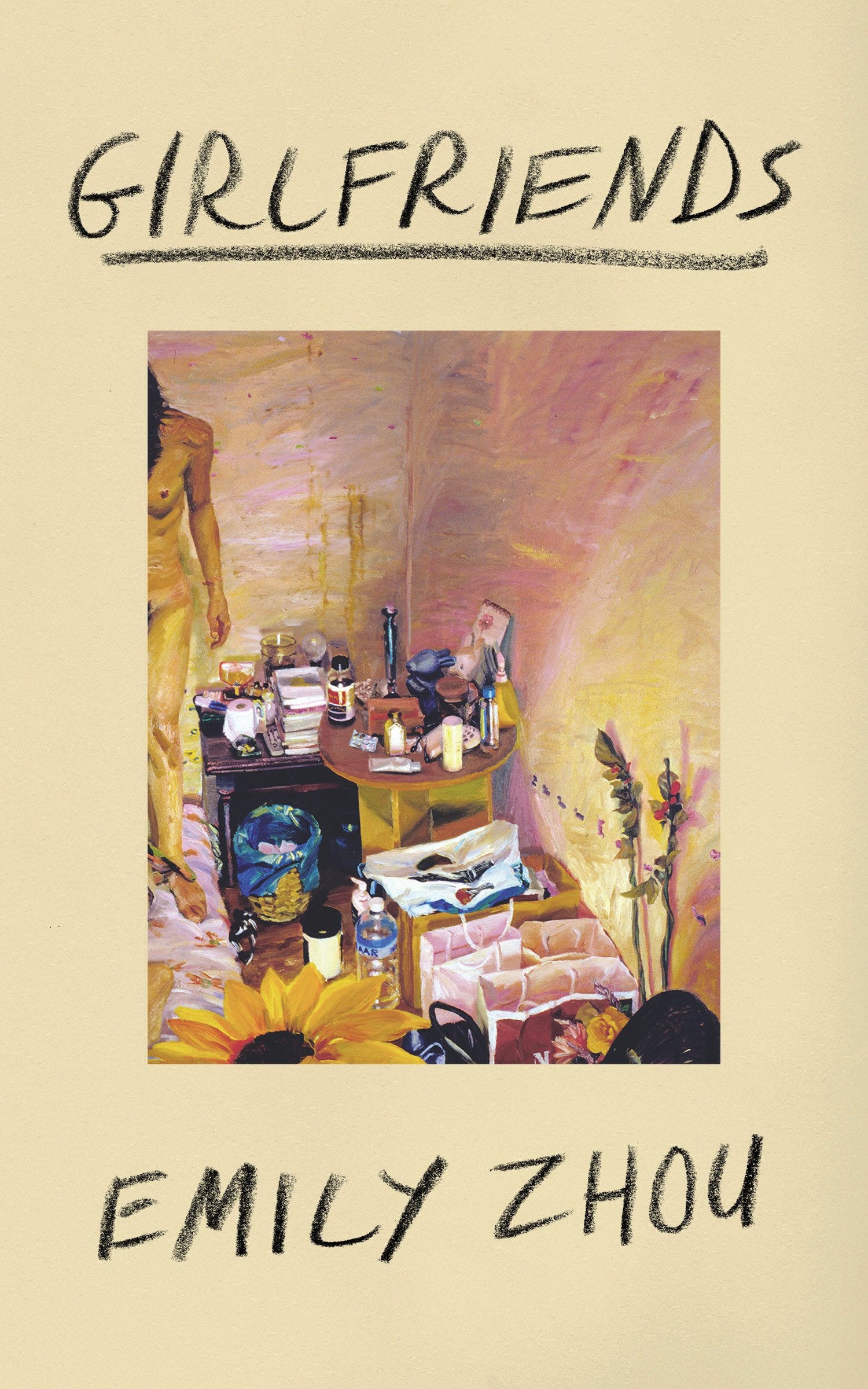
If you want proof, I recommend the 2023 short story collection Girlfriends by Emily Zhou. She’s one of these fabled NYC trans women, and peppered among her thank yous in the back of the book are the names of many of the others I’m referring to.
Each of these stories deserves an analysis, but for the sake of brevity I’m going to focus on three, not necessarily because I think they’re the “best” but because they will allow me to talk about stuff I want to talk about.
Girlfriends bounces between Brooklyn and Zhou’s hometown of Ann Arbor, Michigan, chronicling the lives of several different transfeminine characters at different stages of transition and young adult life. Folks of other genders are around too, but the focus is rarely on them for long.
The collection’s opening story, “Affection”, introduces Zhou’s formula in its most distilled form. Marina, considering dropping out of graduate school in Ann Arbor, goes to a party at the behest of her friend Sylvie, who wants to talk it out with her. Instead, Marina ends up, to her surprise, hooking up with a gay guy named Nico, their meet cute facilitated by a nonbinary photographer friend of Nico’s who leaves the two of them alone in a bedroom with their camera. He begins to photograph her, and it’s not long before Marina warms up and gets naked, seduced by the situation:
Click click click. He kept looking up and over the camera body at her, smiling. She smiled back, came close to laughing a few times but kept herself in check. It took some practice to not flinch at the snap of the mechanism.
There’s something really beautiful here about the way being photographed allows Marina to come into contact with her confidence, such that, while initially appearing sort of shy and demure and intellectualizing, she ends up being the one to kiss first. The erotic experience between these two, at least for Marina, happens in this moment of shooting the photos—the hookup is only the confirmation. Later, as she looks at the photos, she daydreams about seeing them on a gallery wall, and it is clear to us that she has found a reason to stay in Ann Arbor, if not exactly in grad school. What she has found with Nico is more important than (and, I think, preliminary to) finding a “direction in life,” even if not much more happens between them. He has given her something precious, and all she had to do was show up and play along.
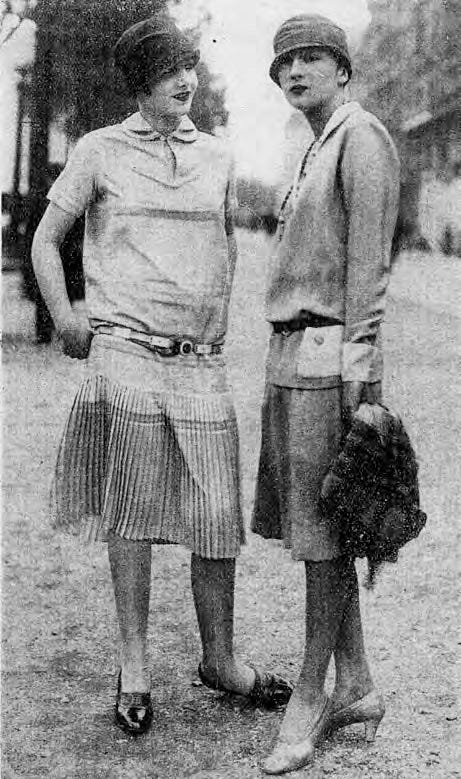
“Affection” touches something deep in trans consciousness. The 20th century emergence of medicalized transition (and thus of “modern” transness) is roughly contemporary with the emergence of cinema and widespread amateur photography, and trans people over the last 120 years have had complicated and intimate relationships with these forms of media. To permit one’s self to be photographed as a trans person, looking the way you want to look—or at least as close to it as you can get—is an opportunity to be remembered as you wish to be remembered, not as your doubters insist on portraying you. If you’re not the one holding the camera, it also requires a trust of the photographer not to betray you. It takes some practice not to flinch.

“Affection” is about the harder, riskier work of not just becoming a woman generally, but a particular woman—of accepting the vulnerability required of it, and finding the strength that lies on the other side of the anxiety of shedding what Torrey Peters called “the armor of masculinity.” Marina doesn’t quite know how to be beautiful as a woman, and wonders, smitten quickly with Nico, whether he’ll see her as enough of a man to be attracted to her. “Men and women are beautiful in different ways,” she muses. “It’s not like your credits transfer over.” There is something distinctively feminine, however, in the way she poses for Nico. Perhaps, as a drag queen himself, he understands something of her need for this. We cannot re-make ourselves entirely—we need others to participate in the process. In youth, our attempts to remake each other can be reckless and damaging, but they can just as often be liberating, and often at the same time.
Zhou’s concern is the intersection of youth and gender—more precisely, in the ways the existential problems common to all young adults are compounded and sometimes extended by transition. The protagonists in Girlfriends are transfeminine, but the stories are about frustrating sexual relations, difficulties with parents, impulsive decisions, bad housemate situations, social anxiety, and generally just being out there in the world and technically an adult, but not having any real idea of what to do with yourself. Ultimately, you have no choice to dive in and trust the process, which is what the book’s third story, “Means to an End”, is about.
This story’s first-person protagonist is Leonora, a recently out and transitioning girl who dropped out of college at age 20, despite being prodigious enough in creative writing to have been favored by her TA, Nadine, with whom she now lives, along with a bunch of other lesbians (all of them cis). Like many “baby trans” girls, Leonora is quite passive, presumably unsure of how to conduct herself after a gender-alienated childhood, and intimidated (but hardly impressed) by the more developed lives and personalities of her older housemates. At the story’s outset, she has accepted the role of kid sister to Nadine, avoiding direct involvement in the apartment’s interpersonal squabbles while also paying close attention to them. It’s easy to imagine Leonora having felt special over Nadine taking her seriously enough to ask her to move in, but whatever sense of pride she may have felt in being precocious has been outmatched by the comical immaturity of her housemates, heels firmly dug in, arguing with the same worn-out group therapy jargon to arrive at what Leonora describes as a “stalemate” symbolized by that classic sign of a disorderly twentysomething apartment: an eternally full sink of dishes.
Leonora has little else going on until Nadine introduces her to a trans woman she used to date named Violet. Leonora hasn’t yet met any other trans women, and because of her singularity, Violet takes on a meaning exceeding herself. She is goals—Leonora doesn’t even initially describe her face or body, showing us only what she’s wearing and her bewitching confidence: “Watching her flirt with Nadine made me feel like I had been crazily undervaluing the potential my future life had,” she tells us.
Violet’s first question: is the chosen name Leonora a reference to Leonora Carrington? No, she replies, she’s never heard of that artist. In speaking this way, Leonora recognizes, Violet is able to simultaneous register their mutual transness and pull rank in terms of her sophistication. Her exceeding of herself is not only a matter of Leonora’s projections—she broadcasts it too, and it soon becomes impossible to tease the two forces apart. Naturally, Leonora jumps at the opportunity to see her later at a party at her apartment, where they have sex.
Surprisingly, it’s Leonora who initiates the sex with a kiss. Girlfriends is peppered with such moments, where Zhou’s withdrawn but intensely observant protagonists suddenly get a wild hare up their asses and do something uncharacteristically bold and assertive, with no follow-up plan. Sometimes this indicates the change in the character upon which the story hinges, but here I think it’s more a case of taking the bait. Zhou exhibits a hilarious viciousness as she depicts Leonora turning, during a gap in the sex, to look at Violet’s bookshelf—“Some of [the books] were German,” she says, as if this should be inherently impressive. Her naïveté in the moment, however, is tempered by the retroactive skepticism of the wiser Leonora who is narrating: “The only decor […] was, I swear to god, three huge canvasses painted in the same shade of bright green hung on the wall. Everything else was on the floor.”
The tension between these past and present perspectives is one of the most interesting things in the story, and it’s worth pausing to point out that a lot of people in Leonora’s position might not be attracted to someone like Violet—they’d just think (and Narrator Leonora might agree with them) that she’s a snobby hipster bitch. They want sincerity and tenderness and validation, and hooray for them. To find this whole scenario hot at all, you have to have a certain kind of mindset—you have to be seduced by a pyramid scheme of refinement, clout, and aura in which superiority is based, in a pseudo-meritocratic fashion, on the work of self-cultivation in all things, or at least the appearance of it.
With little friction, Zhou both satirizes and accepts this hierarchical arrangement. Sure, all of this social currency is fake, all of this front is silly, but it has a serious purpose: at the end of the day, everyone can’t be invited to everything—it would be murderous to the vibes, and the vibes, already fragile and prone to rapid decay, must be defended. This is how subcultural communities maintain their integrity long enough to actually produce valuable output like the book I’m talking about. The reason you may feel excluded from this or that scene is the same reason you want to be part of it. To actively hate it is only to confess its relevance.
We see all of this dramatized as an actual S&M scenario, which funny, but also barely even a joke. In this culture, we’re so often forced to express our love, tender and earnest as it may be, through a language and architecture of cruelty and domination. Some people are loathe to admit this, but resistance, though potentially noble and to an extent morally necessary, is ultimately futile. Ironic distance becomes the crucial skill, and the ironic distance in this scene is razor-thin: “She was holding me down, but just barely,” Leonora says. “I could have shoved her off with a subliminal nudge.”
For Leonora, additionally, this isn’t just a matter of becoming a cool woman, but a woman at all: “I didn’t think to tell her it was my first time as a woman.” Already, she’s practicing fronting, but the trans woman reader especially knows how profound this moment really is for her, how impossible it is for her to remain chill. Even Nadine’s wary reception of the news of the hookup and her withering assessment of Violet’s insecurities do nothing to dissuade Leonora. Aura trumps truth: “I was thinking about Violet constantly.”
Her single-minded focus makes her realize the rest of her life, professionally and socially, is stupid and boring, which happens to be kind of true. It also changes her relationships with others. Hitherto passively loyal to Nadine, she meekly but definitively sides with housemates Minna and Adelaide in a new fight, contributing to the further deterioration of her housing situation. She also calls her sister, who hasn’t heard from her in a while, revealing to the reader her very tense family situation and exhibiting an aggression we haven’t yet seen from her.
As it turns out, though, she’s blowing up her life for nothing in particular. When she’s finally able to see Violet again, Violet dumps cold water all over her infatuation: “I get it, I represent something to you,” she says. “I’m not a real person to you, I’m an experience. I’m a means to an end.”
Leonora could very well say the same thing, of course, and maybe this is the point—the two of them had been using each other to feel powerful and cool and affirmed in their transitions. Violet certainly doesn’t owe Leonora a relationship, but her putting Leonora in this position is kind of bullshit—it’d be more honest just to say she doesn’t want a relationship, it was just a hookup to her, etc. But playing the victim is always easier, and Leonora comes away from the interaction devastated.
Violet attempts to apologize in that great art form, the novel-length text, but Leonora doesn’t bother to read it. She’s tired of the bullshit, all of it. She gets up and does the dishes herself, and I get the sense that it’s not because she wants to prove she’s a better person but just because it’s so stupid that they’re just sitting there undone. “It took fifteen minutes,” she tells us, pithily. “I thought about how maybe my life had finally begun, after a few delays. I was still young.”
Until now, she has expected people to save her and light the way—her family, Nadine, Violet—but all of them have failed, and she has actually found solace not in other people, but in the choice to act—even, and this is crucial, when her actions turn out badly.
Zhou understands that it is the presence as much as the absence of people that makes most of us feel truly lonely—we have friends, but we are still lonely, because we aren’t giving or getting what we need to/from them. Often, this is because we are too busy managing our self-images, not even necessarily for clout preservation, but just to feel good about ourselves, to do the right thing for others. Genuine social life can fall away in the dance of self-images which, fun as it is, and as serious a business as it can be, can never substitute for honest, earnest connection. The dance’s purpose, instead, is to provide a safe screen for connection in a world governed by falseness and selfishness.
Her writing style itself is an example of this. Her tone can feels a little too hip, a little too nonchalant, but that only serves to highlight the moments when genuine emotion or a simple perception of beauty emerges from all the flatness. There’s also a political virtue in the iciness. We, as a culture, expect women to be so goddamn emotional, to do all our crying for us. Growing understandably cold in the face of a patriarchal order that both desires and loathes us, we worry, as women, that we aren’t emotional enough, caring enough, empathic enough. We want to feel something, and we may find ourselves struck with the wild impulse to do something a little reckless to convince ourselves and the people in our lives that yes, we are good, feeling women, only to then feel compelled to pretend it didn’t happen. Violet, for instance, can’t accept that she took advantage of someone in a moment of passion and affection, so she has to twist it into someone taking advantage of her, despite her having every relevant advantage in the situation. This is madness—not a uniquely feminine form of madness, but a very popular one among women.
Nonchalance is the counterpoint to the demand for emotionality. It’s a distinctly feminine foil to male nihilism, whose petulant anger betrays its own claim to no longer care. Nonchalance also betrays its caring, but with a well-rehearsed indifference. What’s so great about any of this, really, in the end? It’s just my life. It’s a silly little thing to get so worked up over.
Youth is a time to experiment with boundaries. How do I want to treat people? How do I want to be treated? Hopefully there’s some identity between our answers to these two questions, but settling on a workable approach is not easy. If we’re too accommodating, people will take advantage of us. If we’re too domineering, we’ll alienate people. But simply staking out a middle ground isn’t always the right answer. What if the right thing for you to do at a given moment, at least the most expedient right thing, is not a particularly good thing? Is it justified for the greater good of your own life? And even if it’s not, who really gives a shit?
“Ponytail” approaches these questions through the story of a former t4t couple, one fem, the other masc, who both transitioned after breaking up. Their relationship was toxic and ended in a drastic act of violence on the part of the transmasc partner, Ambrose, who stabbed the story’s narrator, Veronica, with a fountain pen. After dumping him softly, she tells us, she isn’t sure how to feel “beyond that I was ‘making the right decision.’”
The “right decision” often doesn’t feel right, and it is perhaps this emotional uncertainty than draws them back together post-transition, two years after their eight-month disaster. Their initial meeting is stiff and professional, with a strictly factual exchange of biographical developments whose clinical nature Zhou humorously emphasizes with numbered lists. This only highlights the tension, even if it’s meant to neutralize it: “It was almost irritating how comfortable I felt around him,” Veronica confesses. With both of them having settled into the correct gender and apparently doing better emotionally, it seems like the barriers that demanded their separation no longer exist. “I could plausibly keep him at this exact length from me,” Veronica says, ironically opening up the possibility that she might choose not to.
Part of me wonders why she’d even want to see Ambrose at all, but I also understand very well: apart from morbid curiosity about how he’s doing, she wants to test her resolve, prove to herself she can be mature about all this, and maybe recapture, in platonic form, whatever may have worked about the relationship. But, at bottom, she just doesn’t want to admit that he hurt her. So of course she has to not only meet up with him, but agree to go to a party with him.
Encountering a group of trans women smoking at the party, Veronica reads them to filth in her head:
I tried to recognize them as transmuted versions of guys I knew from college. They were both super early in transition, like less than a year probably, and dressed in a way that they probably thought was “dykey” but was really just unflattering and semi-closeted. Whenever I saw girls like that I wanted to take them downtown and force them to max out their credit cards. There’s only so much you can do with clothes and hair and makeup, but some people aren’t even trying.
These are precisely the sort of comments that give NYC trans girls their reputations as “mean girls” on social media, and I do think they’re supposed to create a certain sympathetic distance between the reader and Veronica, who, only two years in herself, is probably still quite insecure about her own transition. They also tell us something about her need for regulating principles given a past characterized by weak boundaries. Such principles can have a beneficial effect for an individual whether they’re hierarchal or egalitarian, and in most cases I think the choice is probably more dispositional than principled, however much we might tell ourselves otherwise—especially in youth.
Helpful as it may be to her morale, however, Veronica’s pride blinds her to truths that are obvious to these less cultivated girls. When Ambrose leaves the smoking group because it’s too cold, they immediately start talking smack about what they perceive to be his phony masculine fronting and his apparently well-known status as an “abusive shithead.” Having formerly assumed, optimistically, that his abuses ended with her, she begins to wonder if she has been too charitable to him. “I didn’t think he was physically capable of harming someone,” she says, but the reader has not forgotten how he stabbed her with a fountain pen. Has she blocked out the memory? The ghost of the fountain pen rises to the surface of Veronica’s thoughts and actions as she recalls their relationship as “a fountain of problems” and takes a “long, contemplative rip” off her vape pen. She considers trying to find out more, but ultimately decides that “I got what I needed out of this.”
It’s only now that her victimhood really faces her, on an emotional level, and the principled facade of her attempt to have a mature hang with Ambrose breaks apart. Zhou’s brilliant move, however, is not to give us what we may expect—a mic-dropping confrontation with Ambrose in which she tells him how she really feels and what he really did to her—but something far pettier, more random, and more realistic: she decides to humiliate another, perfectly innocent trans woman about her surgery choices in front of the guy she’s with, ultimately stealing the guy right from under her nose. I love the way Zhou has Veronica sort of stumble into this brazen sequence, at first feeling some remorse for her passively cutting comments, then consciously leaning in.
Mean as it is, is this at least a sign that Veronica has accepted the wreck of her relationship with Ambrose and moved on? Hell no, not at all. All she’s done is flip the script to make herself the one with the power to harm, albeit in a different register (no pen stabbings necessary). But this is still a sort of progress. It reminds me of the one useful quote I’ve ever heard from Jordan Peterson (which means he probably stole it from someone else): “If you are not capable of cruelty, you are absolutely a victim to anyone who is.” It is in this moment that Veronica becomes capable of cruelty, and like any superhero with a new power, she doesn’t use it responsibly at first, but she may yet learn to.
Zhou is such a convincing writer that it’s easy to miss how controversial this moment really is. Trans solidarity is supposed to be paramount, and someone’s personal growth is never supposed to come at the cost of another’s misfortune. If we disobey these precepts, the story goes, we end up selfish individualists, as good as fascists. Sounds great, very high minded, but anyone who’s actually lived life knows that if you try to do right by everyone and always wait for the most ethical moment to act, you’ll screw yourself up with scrupulosity and never actually do anything. Besides, what’s the harm in a bit of selfishness like this? If that guy was really into that girl, he wouldn’t have dropped her so easily—and he’s probably not worth Veronica’s time either, but that’s not the point. What’s at stake here is self-respect. This character needs it desperately, so she takes it the first chance she gets, through this act, whose value lies precisely in its gratuitousness. Confronting Ambrose would be, like everything that preceded it, far too measured, far too sensible, unable to match the unfairness of how he treated her.
As another character says elsewhere in the book, “trans community is a fucked concept.” Too much inevitably gets in the way—not least of all our own flaws—for us to easily or consistently prioritize looking out for each other.
“Ponytail” illustrates two of the harshest lessons of youth: people are going to hurt you, and you are going to hurt people. You’re not going to figure yourself and other people out, to whatever extent anyone ever actually does, without harm happening. You should make an effort to learn from your experience, but it’s also virtually inevitable that you won’t learn everything the first, second, or third time you make the same mistake—and that’s another problem: nothing is ever completely a mistake. As we also saw in “Means to an End,” good often emerges even from bad decisions and misfortune at the hands of others, such that, when you look back at your life, your regrets and traumas will still sting, but it will be hard to seriously imagine it having gone any other way.
It’s often young people, however, who feel the most anxious about making mistakes, exposing themselves to danger, and “being a bad person,” even though they of all people have the best excuse: “I was still young.” The Internet, with its ersatz social life and endless catalogue of second-hand experiences, can easily minister to this anxiety, allowing us to endlessly defer doing anything. In this regard, Girlfriends, for all its tonal coolness, turns out to be a life affirming book, because its characters all take the risk of trying to be someone, trying to get to know others, and trying to do something, even the most minimal thing, to go a bit deeper. Most of them aren’t exactly happy, but they are living, and life is about living, whatever that even means.